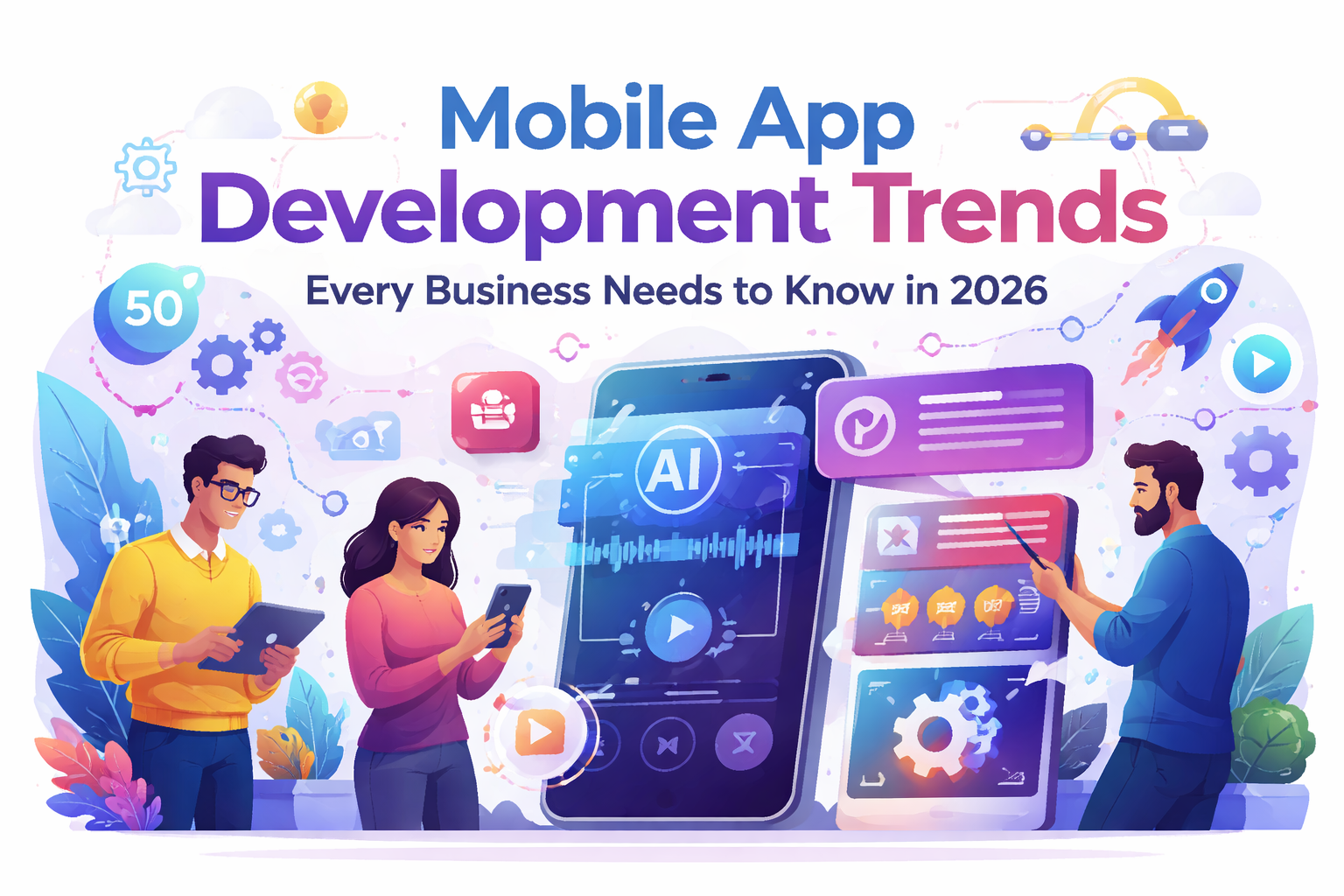
Mobile App Development Trends Every Business Needs to Know in 2026
The mobile app landscape in 2026 is evolving rapidly, driven by advancements in technology that prioritize intelligence, speed, immersion, and user-centric experiences. For businesses aiming to stay competitive, partnering with a reliable app development company is essential to harness these shifts effectively.
At Ziga Infotech, a leading mobile app development specialist, we help businesses build innovative solutions across platforms. Here are the top trends businesses should watch in 2026.
1. AI-Powered Personalization and On-Device Intelligence
Artificial Intelligence (AI) is no longer optional; it’s the core of modern apps. In 2026, AI-native apps deliver hyper-personalized experiences, from predictive recommendations to intelligent chatbots that handle complex tasks. On-device AI processes data locally for faster responses, better privacy, and offline capabilities.
Businesses leveraging AI see higher user retention and engagement. Whether in e-commerce, healthcare, or finance, AI transforms generic apps into adaptive companions.
2. Cross-Platform Development Dominance
Developing separate apps for iOS and Android is inefficient. Frameworks like Flutter, React Native, and Kotlin Multiplatform enable cross-platform app development with near-native performance from a single codebase.
This trend reduces costs, speeds up time-to-market, and ensures consistent experiences. For businesses, it means a broader reach without doubling efforts, ideal for startups and enterprises alike.
3. 5G-Enabled Real-Time Experiences
With 5G now widespread, apps exploit ultra-low latency and high speeds for seamless features like real-time streaming, multiplayer gaming, and instant data syncing.
Mobile app development teams optimize for 5G to create lag-free experiences in AR, IoT-connected apps, and live collaborations. This opens doors for industries like logistics, entertainment, and remote services.
4. Augmented Reality (AR) and Immersive Technologies
AR/VR integration moves beyond gaming into retail (virtual try-ons), education (interactive simulations), and real estate (property tours). Foldable devices and spatial computing enhance these immersive interfaces.
iOS app development benefits greatly from Apple’s ARKit advancements, while Android leverages similar tools. Businesses adopting AR boost user interaction and conversion rates significantly.
5. Focus on Privacy, Security, and Sustainable Design
Users demand transparency and control over data. Privacy-first design, including on-device processing and minimal data collection, builds trust.
Apps also emphasize sustainability, optimized code reduces battery drain and carbon footprint. These elements become competitive advantages in 2026.
6. Rise of Super Apps and Progressive Web Apps (PWAs)
Super apps consolidate services (payments, messaging, shopping) into one platform, while PWAs offer app-like experiences via browsers without downloads.
These trends favor efficiency and user convenience, especially in emerging markets.
At Ziga Infotech, our expertise in mobile app development and iOS app development ensures clients stay ahead by integrating these trends strategically.
Conclusion
2026 promises a mobile ecosystem that’s smarter, faster, and more immersive than ever. Businesses that embrace AI, cross-platform efficiency, 5G capabilities, AR, and privacy-focused design will thrive in this dynamic market. Partnering with an experienced app development company like Ziga Infotech can turn these trends into tangible growth opportunities. Don’t just keep up, lead the way with innovative , future-ready mobile solutions.
FAQ
Q1: Why is AI so important in mobile app development in 2026?
A: AI enables hyper-personalization, predictive features, and efficient on-device processing, boosting user engagement and app performance while maintaining privacy.
Q2: Should businesses prioritize cross-platform or native development?
A: Cross-platform development (using tools like Flutter) is ideal for most businesses in 2026 due to cost savings, faster launches, and consistent experiences across iOS and Android.
Q3: How does 5G impact mobile apps?
A: 5G supports real-time features, high-quality streaming, and immersive AR/VR with minimal latency, enabling advanced functionalities in various industries.
Q4: What role does AR play in iOS app development?
A: AR enhances user experiences in retail, education, and more through Apple’s ARKit, making iOS app development highly engaging and interactive.
Q5: How can businesses get started with these trends?
A: Consult a professional mobile app development partner like Ziga Infotech to assess your needs, prototype ideas, and build scalable, trend-aligned apps.